
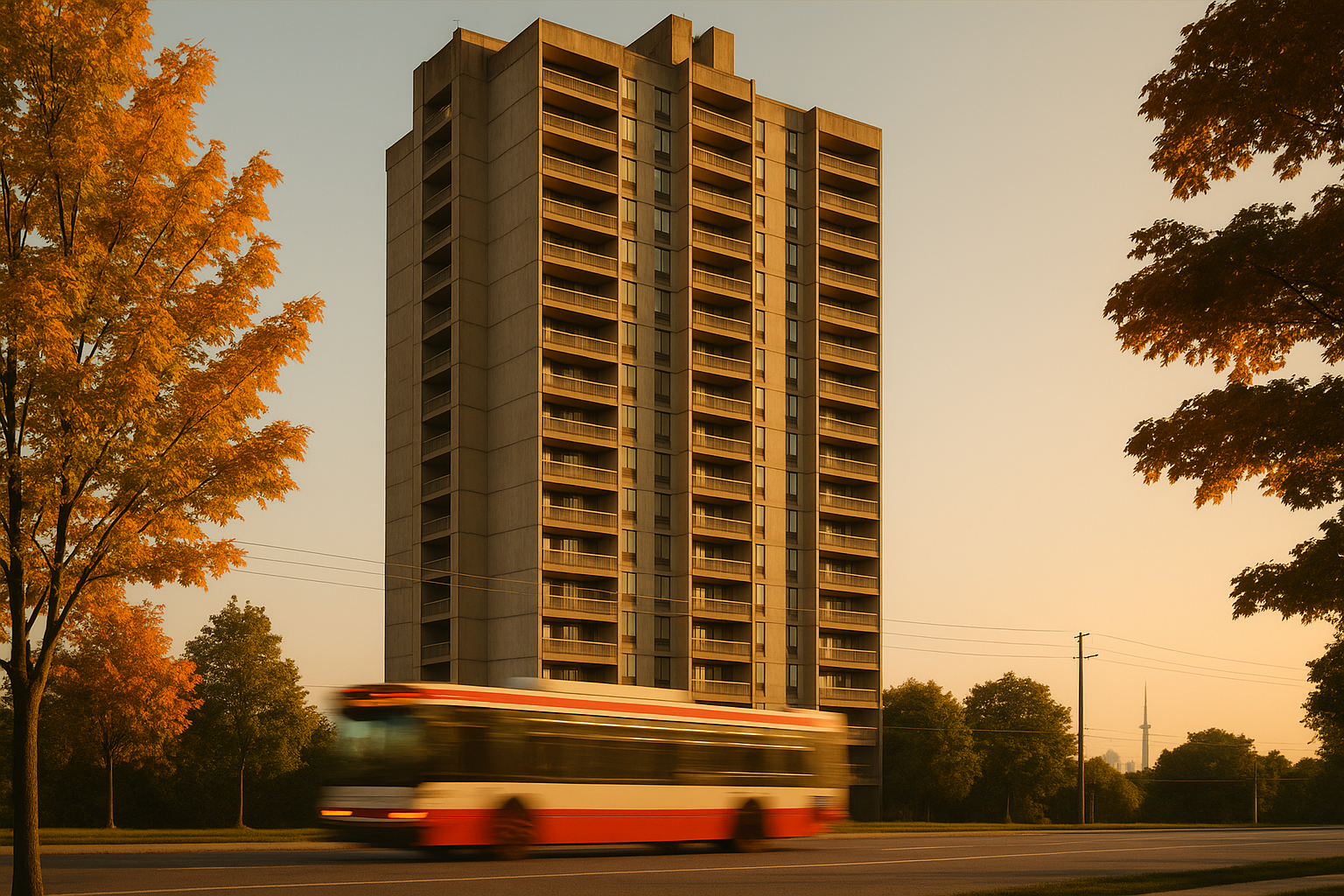
If you've been scrolling MLS listings in September 2026 hoping to find houses for sale in Toronto under $300,000, you already know the pickings are slim — but they're not extinct. After the interest rate cuts of late 2025 and the softer condo market that carried into this year, a specific slice of Toronto real estate has quietly re-opened the door for buyers who thought sub-$300K ownership was gone forever. Spoiler: almost every one of these listings is a condo, and that's exactly why condo-focused buyers are winning right now.
This guide is written specifically for condo buyers hunting the lowest-priced entry points across the GTA. We'll break down where these listings are hiding, what to expect from maintenance fees, which neighbourhoods offer the best long-term upside, and how to avoid the traps that come with ultra-affordable Toronto real estate in 2026.
The State of Toronto's Sub-$300K Market in September 2026
Let's set the stage. As of September 2026, the Toronto Regional Real Estate Board (TRREB) is reporting an average condo apartment price hovering in the low $600,000s — down from the 2022 peak but stabilizing after the Bank of Canada's rate cuts brought the overnight rate down to 2.50%. Detached houses in the 416 average well over $1.4 million. So when we talk about houses for sale in Toronto under $300,000, we're realistically talking about:
- Bachelor and small one-bedroom condo apartments
- Co-ownership units (which have unique financing rules)
- Older stacked townhouses in specific pockets
- Life-lease and 55+ communities
- Assignment sales from stalled pre-construction projects
The good news? Inventory in this bracket has actually grown roughly 18% year-over-year, according to recent TRREB market watch data. Investor exits, completed pre-construction inventory, and estate sales have all added supply. For a first-time condo buyer with a modest down payment, September 2026 is arguably the friendliest window Toronto has offered in nearly a decade.
Where to Actually Find Toronto Houses Under $300,000
Location is everything, and the map for sub-$300K listings looks very different from what you'd see at the $700K mark. Here are the neighbourhoods where inventory is most concentrated this fall.
1. Scarborough — Kennedy Park, Eglinton East, and Morningside
Scarborough remains the affordability king of the 416. Around Kennedy subway station and along the newly extended Eglinton Crosstown LRT (which finally opened full service in spring 2026), you'll find older concrete high-rises from the 1970s and 80s with one-bedroom units listing between $265,000 and $299,000. Maintenance fees run high — often $650 to $800 — but they typically include all utilities, which cushions the blow.
2. Etobicoke — Rexdale, Kipling, and Markland Wood
North Etobicoke has similar bones: mature buildings, generous suite sizes, and prices that still start with a 2. Kipling Station's condo cluster has been particularly active with assignment sales in 2026, and some motivated sellers are letting units go under $290,000 to close before year-end.
3. North York — Jane and Finch, Weston, Downsview
The Finch West LRT, now operational, has quietly boosted transit access in corridors that used to be car-dependent. Bachelor units near Downsview Park have appeared under $275,000 in the last quarter — worth a look if you're single, work from home, or want a rental-friendly footprint.
4. East York and the Danforth Fringe
Smaller boutique buildings east of Pape occasionally list studios in the high $280s. These sell fast, so pre-approval and a responsive agent are non-negotiable.
5. Co-Ownership Buildings Across Midtown
Co-ops in Forest Hill, St. Clair West, and the Annex regularly list one-bedrooms in the $250K–$295K range. These are not condos — you're buying shares in a corporation, not a deeded unit. Financing is trickier (many lenders require 35% down), but for cash-rich buyers, the value per square foot is unbeatable.
Understanding What You're Really Buying
A sticker price under $300,000 in Toronto usually comes with trade-offs. Being clear-eyed about them will save you thousands.
Maintenance Fees Matter More Than the Purchase Price
A $285,000 condo with $780/month in fees costs you more monthly than a $340,000 condo with $450 fees, once mortgage payments equalize. Always ask what's included: heat, hydro, water, cable, internet, parking, and locker can dramatically shift the value equation. In older Scarborough and Etobicoke towers, all-inclusive fees are standard, which is genuinely useful when Toronto Hydro rates climbed again this past July.
Status Certificates Are Non-Negotiable
Before you sign anything firm, have a real estate lawyer review the status certificate. You're looking for reserve fund health, upcoming special assessments, and any pending litigation. Older buildings in the sub-$300K range are frequently facing garage membrane repairs, window replacements, or elevator modernizations — all of which can trigger $5,000 to $25,000 special assessments per unit.
Parking and Locker Realities
Many of the cheapest listings don't include parking. In Scarborough or Etobicoke that's manageable if you're near transit; downtown, it's a lifestyle sacrifice. If parking matters, budget an extra $30,000–$50,000 to buy a spot, or $175–$250/month to rent one.
Financing a Sub-$300K Toronto Condo in 2026
Here's where affordability gets exciting. With the Bank of Canada's overnight rate at 2.50% and five-year fixed mortgage rates sitting around 4.10%–4.35% as of mid-September 2026, monthly carrying costs on these units are the lowest they've been since 2021.
Let's run a quick example on a $289,000 one-bedroom in Scarborough:
- Down payment (5% minimum on first $500K): $14,450
- CMHC insurance premium (4.00%): approx. $10,982 added to mortgage
- Mortgage amount: ~$285,532
- Monthly payment at 4.20%, 25-year amortization: ~$1,535
- Property tax (Toronto residential rate ~0.72%): ~$173/month
- Maintenance fees: ~$720/month
- Estimated all-in monthly cost: ~$2,428
That's competitive with — and often cheaper than — renting a comparable one-bedroom in the same building, which typically leases for $2,300–$2,550 in fall 2026.
Don't Forget Closing Costs
Toronto buyers pay both provincial and municipal land transfer taxes. On a $289,000 purchase, expect roughly $2,405 in Ontario LTT and $2,405 in Toronto LTT. First-time buyers can claim rebates up to $4,000 on each, meaning many first-timers in this price range pay $0 in land transfer tax. Budget another $1,800–$2,500 for legal fees, title insurance, and adjustments.
The First-Time Buyer Programs Still Worth Using in 2026
Several federal and provincial programs make sub-$300K purchases even more accessible:
- Home Buyers' Plan (HBP): Withdraw up to $60,000 tax-free from your RRSP (raised from $35,000 in 2024).
- First Home Savings Account (FHSA): Contribute up to $8,000/year, $40,000 lifetime — deductible going in, tax-free coming out.
- Land Transfer Tax Rebates: Up to $4,000 provincial + $4,475 municipal for first-time Toronto buyers.
- 30-year amortization for first-time buyers on insured mortgages: Still in effect for 2026, lowering monthly payments by roughly 8–10%.
Red Flags to Watch in the Sub-$300K Bracket
Not every cheap listing is a bargain. Walk away — or negotiate hard — when you see:
- Reserve funds under $500 per unit. A serious special assessment is likely brewing.
- Rental restrictions if you're planning to lease it out. Some older co-ops and a growing number of condo boards have tightened rules in 2026.
- Kitec plumbing. Common in buildings from 1995–2007; replacement runs $6,000–$10,000 per unit.
- Aluminum wiring or asbestos disclosures. Insurance premiums climb sharply.
- Ongoing litigation involving the condo corporation. Your lawyer will flag this in the status certificate.
Strategy: How Smart Condo Buyers Are Winning Right Now
Buyers who close successfully in this price bracket tend to follow a similar playbook.
Get Fully Underwritten Pre-Approval, Not Just a Rate Hold
Sub-$300K listings sometimes attract multiple offers even in today's calmer market. A rock-solid pre-approval letter, ideally underwritten by the lender (not just auto-generated), signals to sellers that you can actually close.
Shop the Shoulder Season
Late September through mid-November has historically been the slowest stretch of Toronto's real estate calendar. Days-on-market climb, sellers get nervous, and price drops become common. This is prime time for a patient buyer.
Consider Assignment Sales
Several 2022–2023 pre-construction projects are closing this fall, and original purchasers who no longer qualify at current rates are assigning contracts at or below their original purchase price. Some Etobicoke and North York assignments have listed under $300,000 for units that were pre-sold at $340,000+.
Look at Total Cost of Ownership, Not List Price
Two units at the same price can carry wildly different long-term costs. Model out five years of maintenance fee increases (assume 4–5% annually), property tax growth, and one $8,000 special assessment. The winner isn't always the cheapest sticker.
Is Sub-$300K Toronto Real Estate a Good Investment?
For end-users — buyers who plan to live in the unit for at least five years — the math in September 2026 is genuinely favourable. You're building equity instead of paying a landlord, you've locked in a low entry point in a market that historically appreciates 4–6% annually over long periods, and you have a foothold in the country's largest housing market.
For pure investors, the calculus is tighter. Rental yields on sub-$300K condos in Toronto currently run 4.5%–5.5% gross, but net yields after fees, taxes, insurance, and vacancy typically land at 1.5%–2.5%. It's a long-hold appreciation play, not a cash-flow play.
Your Next Move
If you're serious about finding houses for sale in Toronto under $300,000 this fall, three action items will separate you from the crowd: get fully pre-approved this week, connect with a local agent who specializes in the specific building types listed above (co-ops, older concrete high-rises, assignments), and set up MLS alerts with a hard price ceiling of $305,000 to catch listings that dip after a week or two on market.
The window won't stay open forever. Every rate cut the Bank of Canada makes pushes more buyers back into the market, and entry-level condos are always the first segment to move. In September 2026, patience combined with preparation is the winning formula — and Toronto still has genuine sub-$300K opportunities for the buyers ready to act on them.
Get a FREE Comparative Market Analysis in today's market.What's your home worth?
Browse Other Communities
Enjoy this blog post? Click here to subscribe for updates
Leave A Comment