
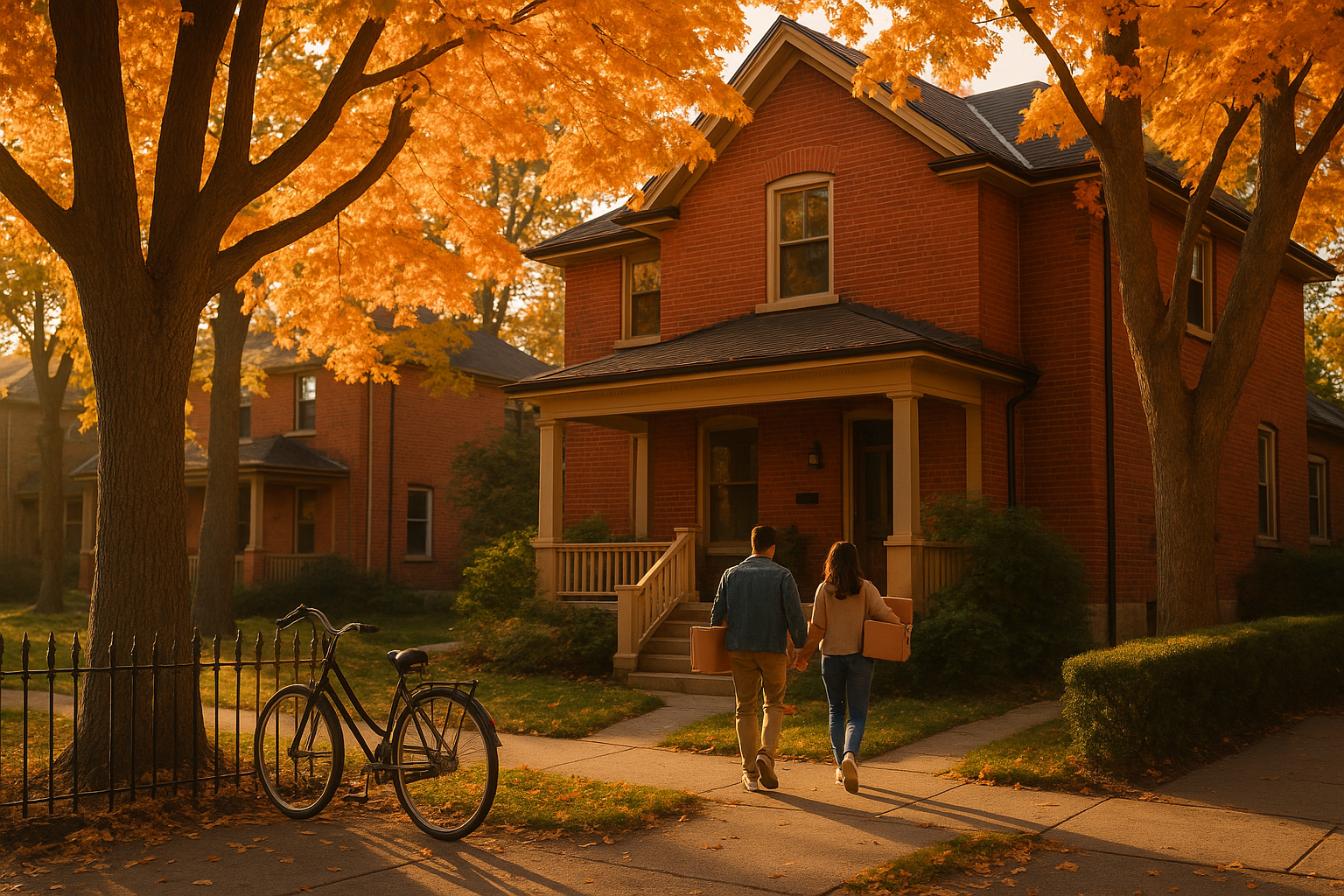
If you've been quietly watching listings, refreshing HouseSigma at midnight, and wondering whether 2026 is finally your year to buy, you're not alone. Thousands of renters across Forest City are asking the same question: what is the average house price in London Ontario right now, and can I actually afford it? As of September 2026, the market has shifted in ways that genuinely favour first-time buyers more than it has in years — but the details matter.
This guide breaks down current pricing by neighbourhood and property type, explains what's driving the numbers, and gives you a realistic playbook for buying your first home in London this fall.
The Average House Price in London Ontario as of September 2026
According to the latest data from the London and St. Thomas Association of REALTORS® (LSTAR), the average residential sale price across the London census metropolitan area sits at approximately $672,000 as of late summer 2026. That represents a modest year-over-year increase of about 3.1% compared to September 2025, when the average hovered near $652,000.
For context, this is still meaningfully below the 2022 peak of roughly $825,000, when ultra-low pandemic-era interest rates pushed prices to unsustainable highs. The correction that followed, combined with two years of essentially flat pricing, has created what many local realtors are calling a "soft landing window" for first-time buyers.
How London Compares to the Rest of Southwestern Ontario
London remains one of the more affordable mid-sized markets in Ontario, especially compared to the GTA:
- Toronto CMA: ~$1,142,000 average
- Hamilton-Burlington: ~$878,000 average
- Kitchener-Waterloo: ~$795,000 average
- London CMA: ~$672,000 average
- Windsor-Essex: ~$589,000 average
That gap is a big reason London continues to attract commuters, remote workers, and young families relocating from more expensive cities.
Price Breakdown by Property Type
The headline average can be misleading because it lumps every property type together. Here's what first-time buyers are actually paying in September 2026:
Detached Homes
The average detached home in London is now around $745,000. Entry-level detached properties — typically older 3-bedroom bungalows or small two-storeys in east or south London — start in the mid-$500,000s. Newer builds in Summerside, Talbot Village, or Sunningdale routinely list between $800,000 and $1.1 million.
Semi-Detached and Townhomes
Freehold townhomes and semis have become the sweet spot for first-time buyers, averaging around $545,000. Well-priced units in neighbourhoods like Byron, Westmount, and Stoneybrook move quickly, often within 10 to 14 days of listing.
Condominium Apartments
Condo apartments average about $395,000, making them the most accessible entry point. Downtown units near Richmond Row and Wortley Village start around $310,000, while newer builds near Masonville and Western University trend higher.
What's Driving London's 2026 Market
Understanding the "why" behind the numbers helps you time your purchase and negotiate smarter.
1. Interest Rates Have Finally Stabilized
After the Bank of Canada's aggressive tightening cycle in 2022–2023 and the gradual cuts through 2024 and 2025, the overnight rate now sits at 2.75% as of September 2026. Five-year fixed mortgage rates from major lenders are hovering between 4.19% and 4.59%, with variable rates slightly lower. For first-time buyers, this stability means predictable monthly payments and easier stress-test qualification than at any point in the last four years.
2. Inventory Has Recovered
Active listings across the London CMA are up roughly 18% compared to fall 2025. Buyers finally have choice again. The average days on market has stretched to 28 days, up from just 12 during the frenzied spring 2022 market. Bidding wars still happen — but mostly on well-priced, move-in-ready homes under $650,000.
3. Population Growth Continues
London's population crossed 585,000 in the 2026 estimates, and immigration plus interprovincial migration from Alberta and BC continues to fuel steady housing demand. This is why prices aren't collapsing despite higher rates — the underlying demand is real and durable.
4. New Construction Is Slowing
Housing starts in London are down 22% year-over-year, largely due to elevated construction costs and cautious developers. This will likely tighten supply again in 2027, which is one reason many analysts recommend buying sooner rather than later if you're financially ready.
Best London Neighbourhoods for First-Time Buyers in 2026
Old East Village
Still one of London's best value plays. Average detached homes: $485,000–$575,000. The Dundas Place revitalization continues to lift the area, and the Western Fair district brings walkable amenities.
Hamilton Road / Glen Cairn
Older bungalows and 1.5-storey homes in the $450,000–$550,000 range. Great for buyers willing to do cosmetic updates.
White Oaks and Westminster
South London townhomes and semis between $475,000 and $600,000. Excellent bus access and proximity to Highway 401 for commuters.
Huron Heights and Argyle
East-end neighbourhoods where you can still find detached homes under $525,000. Family-friendly with strong schools and Fanshawe College access.
Byron and Westmount
Slightly pricier ($625,000–$775,000) but consistently strong resale value. Ideal if you're planning to stay 7+ years.
What You Actually Need to Buy in London Today
Let's translate the average house price in London Ontario into real numbers for your budget.
Minimum Down Payment
For a $545,000 townhome (a realistic first purchase in 2026):
- 5% on the first $500,000: $25,000
- 10% on the portion from $500,000–$545,000: $4,500
- Total minimum down payment: $29,500
Add roughly 1.5% for closing costs (~$8,175) covering land transfer tax, legal fees, title insurance, and adjustments. Ontario first-time buyers receive up to $4,000 back on the provincial land transfer tax — a meaningful rebate.
Income Required
With a 5-year fixed at 4.39%, 25-year amortization, and CMHC insurance, monthly carrying costs (mortgage, property tax, heat) on that $545,000 home land around $3,450/month. Under the current federal stress test, most lenders will want to see household income of roughly $118,000–$125,000 to qualify comfortably, assuming minimal other debt.
Programs Worth Using in 2026
- First Home Savings Account (FHSA): Contribute up to $8,000/year, $40,000 lifetime, tax-deductible with tax-free withdrawals for a home purchase.
- RRSP Home Buyers' Plan: Withdraw up to $60,000 per person tax-free (increased in 2024).
- 30-year amortizations: Available to first-time buyers purchasing newly built homes, reducing monthly payments.
- Ontario Land Transfer Tax Rebate: Up to $4,000 back.
Is Fall 2026 a Good Time to Buy in London?
For qualified first-time buyers, the honest answer is: yes, conditions are more favourable than they've been in years. You have:
- More listings to choose from
- Reasonable financing rates
- Sellers who are increasingly willing to negotiate
- Home inspection conditions back on most offers
- Modest but steady appreciation protecting your equity
What you don't have is a crashing market. Anyone waiting for 2020-style pricing to return is likely going to keep waiting — and paying rent — indefinitely. London's fundamentals (population growth, employment diversification through Amazon, Maple Leaf Foods, and the hospital/university sector) support current pricing.
Common Mistakes First-Time Buyers Make in London
Skipping the Pre-Approval
In a market with 28-day average DOM, you have time — but not that much time. Get a rate hold from a mortgage broker before you tour a single property.
Overlooking Condo Fees
A $395,000 condo with $650/month in fees carries almost the same monthly cost as a $475,000 townhome with none. Always compare total cost of ownership.
Ignoring the Home Inspection
Many London homes are 40+ years old. Knob-and-tube wiring, aluminum wiring, aging furnaces, and foundation issues are real. A $500 inspection can save you $50,000.
Buying at the Absolute Top of Your Budget
Rates could shift again. Leave yourself a 10–15% buffer for property tax increases, maintenance, and life surprises.
The Bottom Line
The average house price in London Ontario in September 2026 — around $672,000 overall, with realistic first-time buyer entry points between $395,000 and $600,000 — represents a market that is finally accessible again for buyers who have been patient and prepared. The window won't stay open forever. If your finances are in order, your down payment is saved, and you plan to stay put for at least five years, this is a market worth taking seriously.
Talk to a local mortgage broker, get pre-approved, connect with a REALTOR® who knows your target neighbourhoods, and start touring. The Forest City is ready for its next generation of homeowners.
Get a FREE Comparative Market Analysis in today's market.What's your home worth?
Browse Other Communities
Enjoy this blog post? Click here to subscribe for updates
Leave A Comment